Controlled conditions
An experiment is one suite, one model, N attempts per task, over every arm you pick. Change one variable at a time; Azoth holds the rest still.
SCIENTIFIC EVALUATION LABORATORY
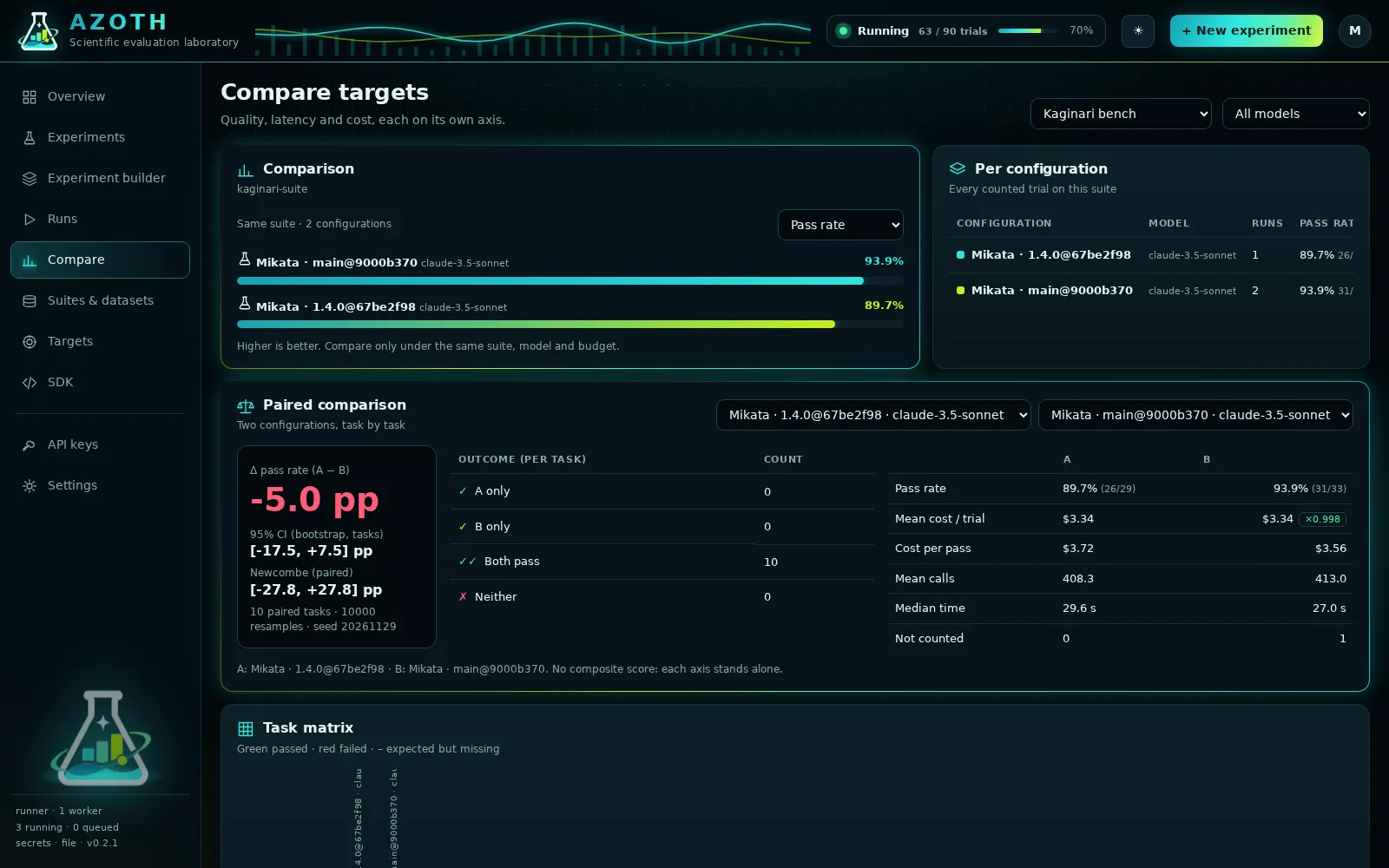
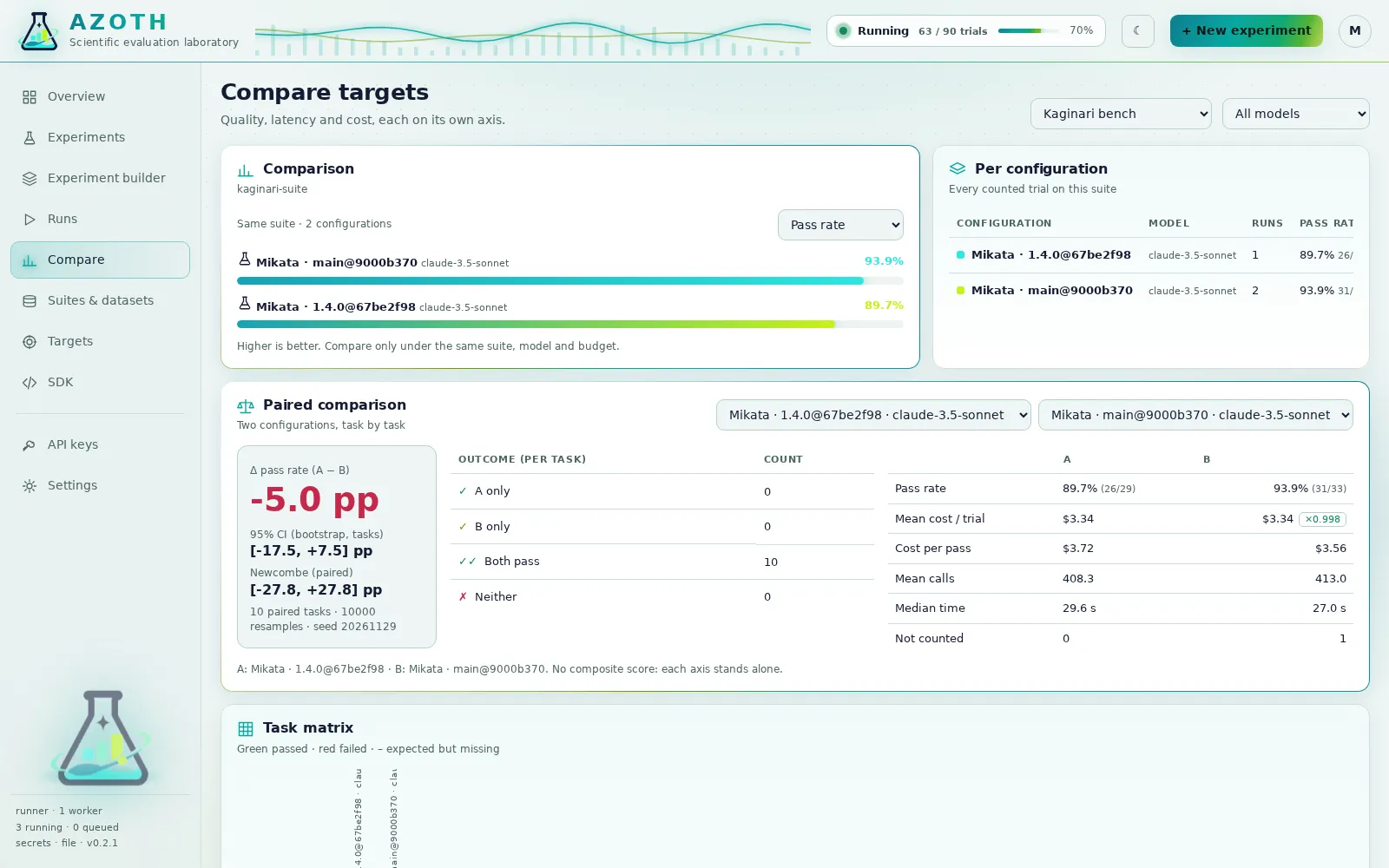
Azoth runs coding-agent harnesses on the same suite, the same model and the same budget. It holds the bar before the result, keeps every trial's evidence, and shows you, task by task, which one actually does the work.
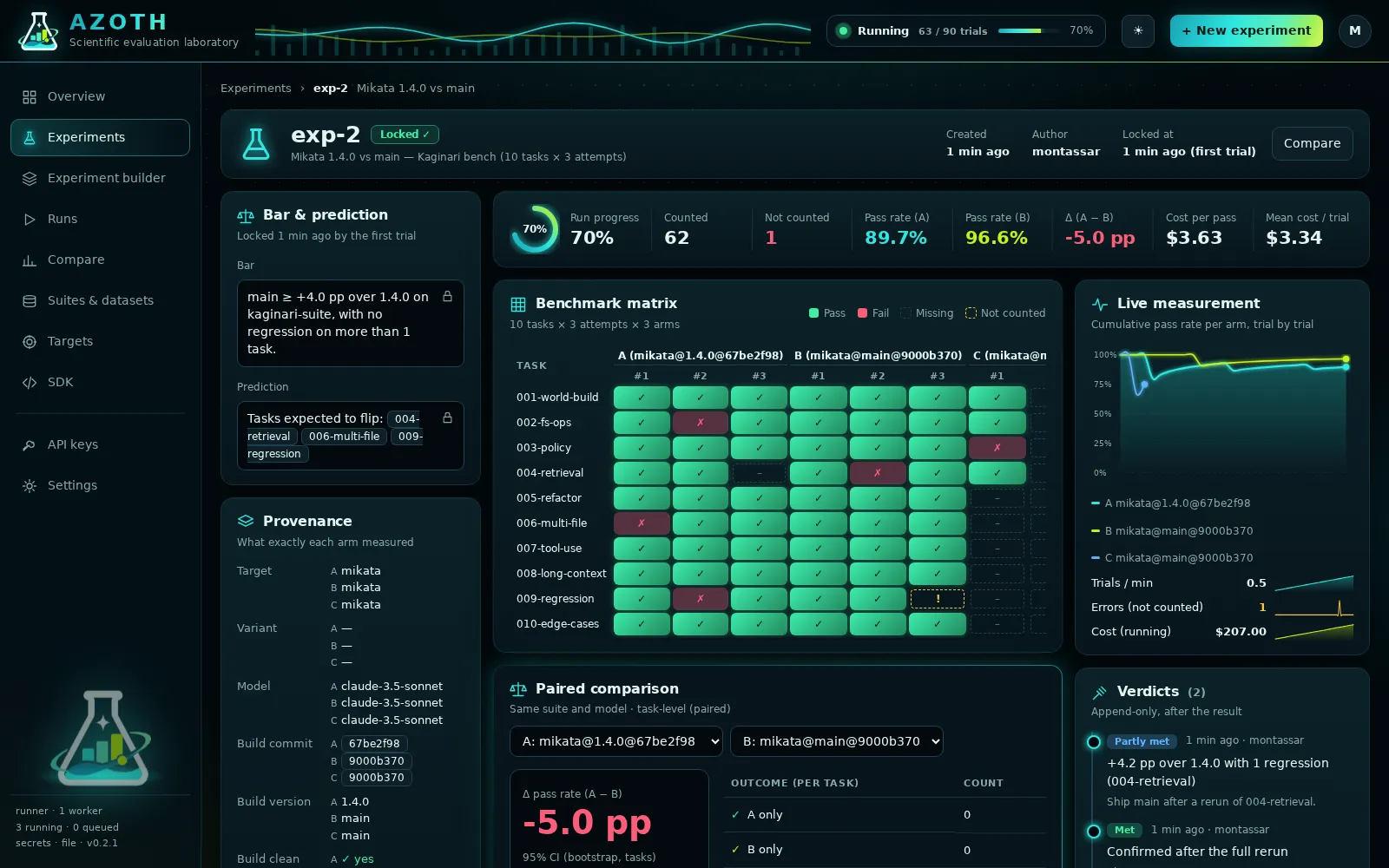
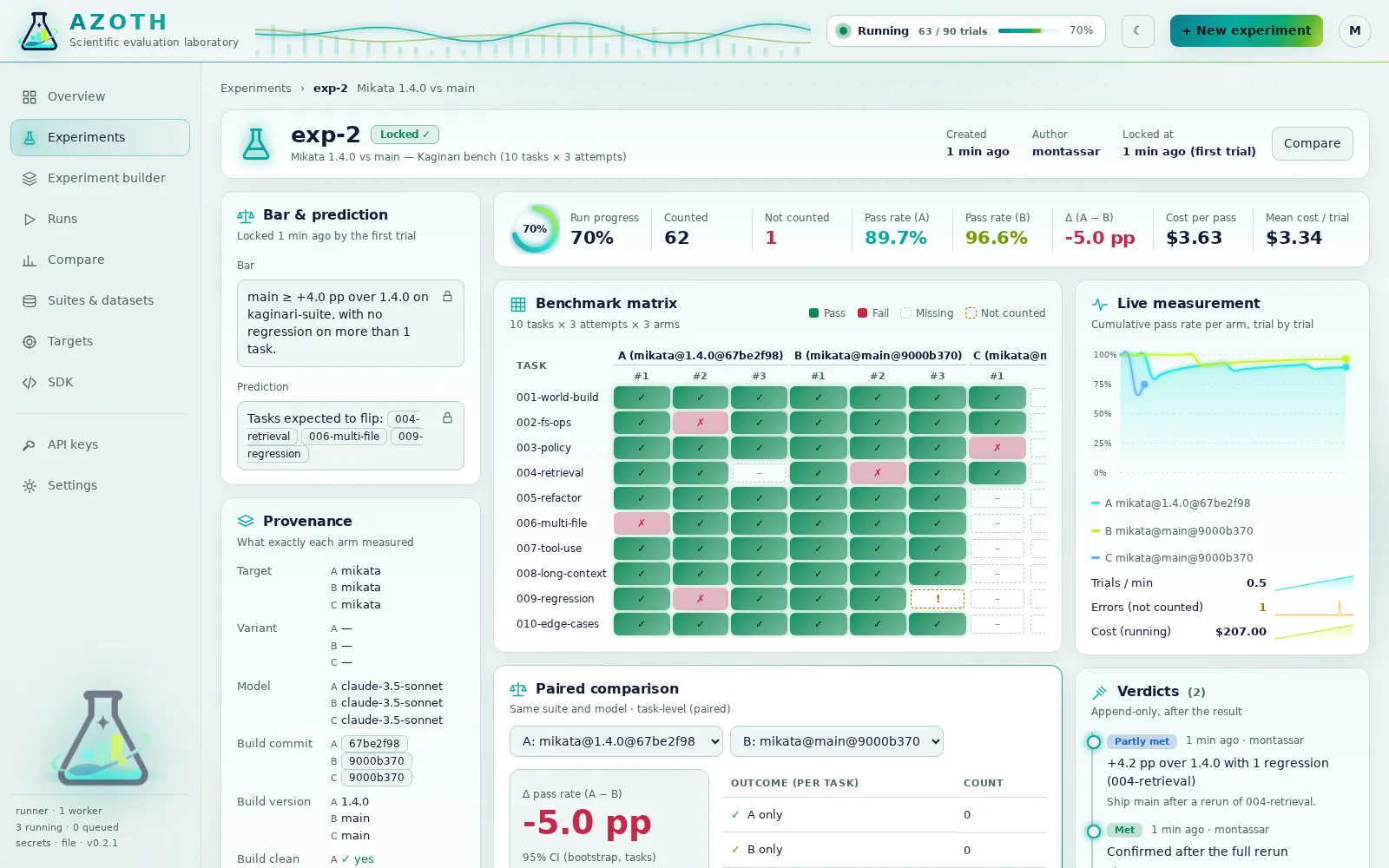
An experiment is one suite, one model, N attempts per task, over every arm you pick. Change one variable at a time; Azoth holds the rest still.
Each trial keeps the harness's output, the verify result, time, tokens, calls and cost. Open any failure and read why it failed.
Mikata, OpenCode, Claude Code: a 20-line adapter each. Anything else reports through the SDK, from CI or from Terminal-Bench through Harbor.
HOW IT WORKS
FROM OUR OWN LAB
Kaginari's first suite: 30 small Python tasks, from FizzBuzz to a Caesar cipher. Mikata ran each alone, then handing the work down its hierarchy, on DeepSeek V4 Flash. The control touched nothing.
Mikata bench, deepseek/deepseek-v4-flash-0731, November 2026. One trial per task: a first measurement, not a leaderboard.
SDK
Declare the experiment and its bar, open a run per arm, report each trial, close it. Rust and Python clients, or plain HTTP with a report-only key. Retries never double a trial. Results land next to the runs Azoth executed itself, on the same axes.
let arena = Client::new(url, key);
arena.register_target("my-harness", "My harness", "")?;
let run = arena.start_run(&NewRun::named(
    "Nightly", "mikata-bench-30", "my-harness",
    "deepseek/deepseek-v4.1-flash"))?;
arena.report_trial(run.id, &Trial {
    task: "01-fizzbuzz".into(), passed: true,
    duration_ms: Some(23_200), ..Default::default() })?;
arena.finish(run.id, "completed")?;
SECURITY
Azoth runs inside your network, reachable over your VPN only, and every trial runs in a sandbox. This page is the only public part.
People sign in through your Keycloak; only the groups you name get in. Programs use API keys stored as hashes, shown once.
Provider keys are read from Vault per trial, handed to that trial's process only, and scrubbed from every log Azoth keeps.


It runs today on Kaginari's own infrastructure, measuring Mikata and Hivemind's harnesses. Ask a Kaginari engineer for access.